Omega Flush Flush Mix Boosts Conception Rates
03 March, 2026 | By Pat Wilson
Photographs by Rob Haining
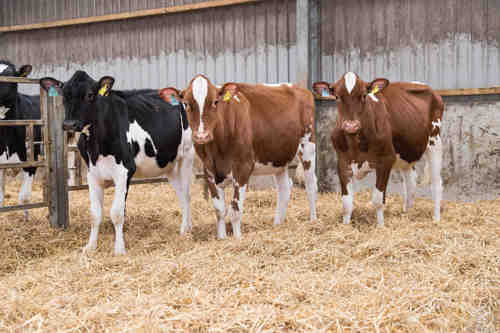
Embryo Transfer conception rates have risen by 10% at Myremill, Maybole, after Kevin and Alison Lawrie switched to an Omega flush mix for their donor cows formulated by Galloway and MacLeod.
The couple, who farm in partnership with Kevin’s parents, Gilmour and Caroline, now regard the ration as central to their embryo transfer programme.
Kevin is the fourth generation to run the world’s oldest pedigree Ayrshire herd under the Brieryside prefix. The 350-acre unit, along with a further 200 acres of rented ground, is also home to the Arranview Holstein herd which focuses on type and commercial performance.
By concentrating on homegrown forages, 87% of the feed ration is produced on farm. This includes 150 acres of maize silage, 150 acres of caustic-treated wheat and 30 acres of barley. Three cuts of grass silage from 220 acres are taken plus a fourth from an additional 100 acres to support both milk output and the flushing programme.
The 320 cows – roughly 70% Holsteins and 30% Ayrshires – are housed all year round and milked three times daily through a GEA 30/30 rapid-exit parlour. Cows are fed to yield in the parlour with an 18% protein cake, alongside a TMR based on silage, molasses, maize, barley, a high-protein soya blend and whole-crop wheat. The herd averages 11,800 litres at 4.2%BF and 3.6%P, with all milk sold through First Milk.
Breeding strategy and Embroy Transfers
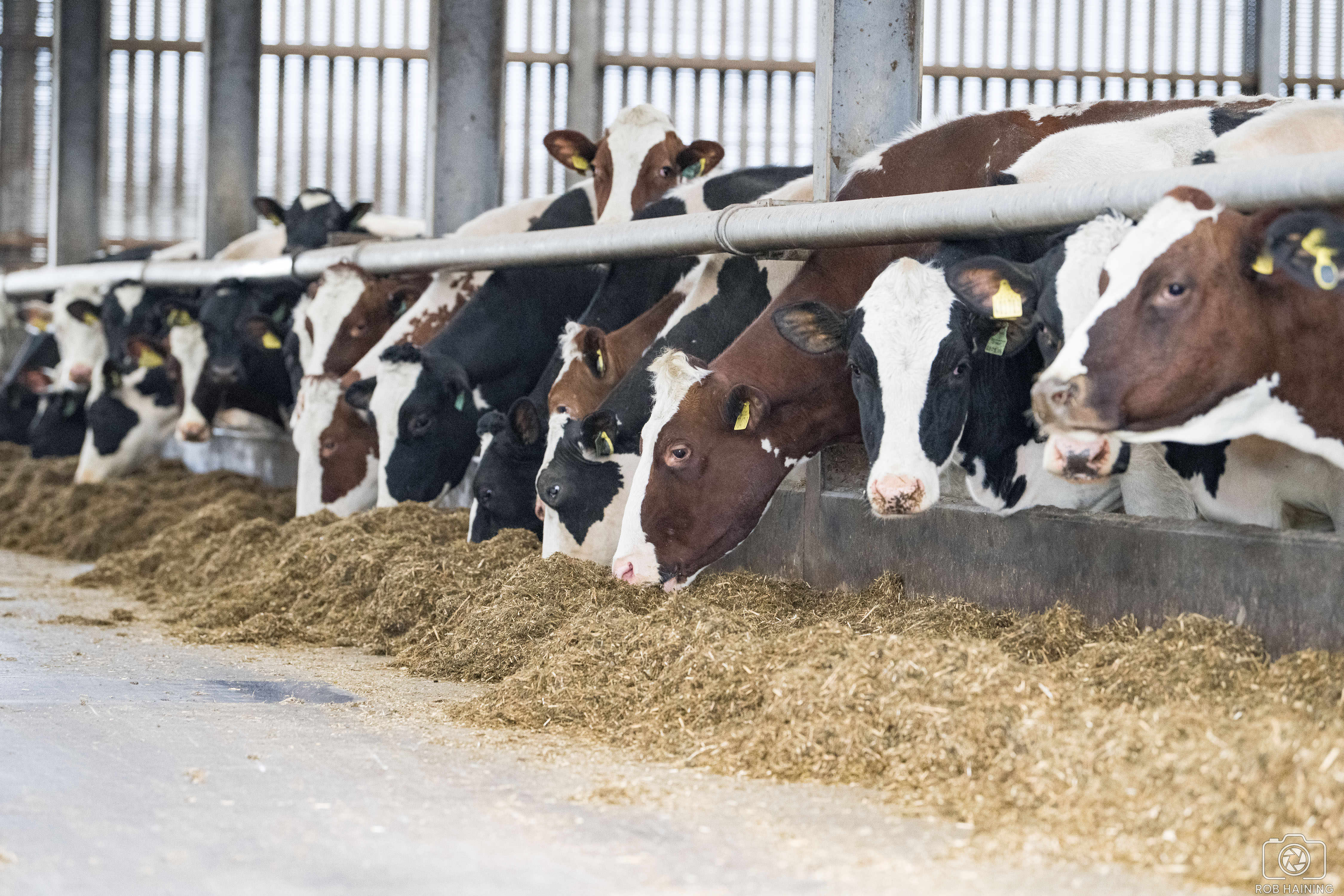
Around 30% of the herd’s top females are AI’d with sexed semen to produce approximately 100 replacements annually. Heifers, unless served with sexed semen, get two opportunities to hold an embryo transfer (ET) pregnancy before being AI’d with Aberdeen Angus semen, while the remainder of the milking herd is also served to Angus.
These Angus-cross calves leave the farm at two weeks old, at around 50kg liveweight, and are sold through Highland Meats to youngstock rearing units. The Lawries previously reared these calves through to 18 months and sold them as stores, but the current system is more cost-effective and far less time-consuming.
The flushing journey at Myremill was largely instigated by Alison, who worked with the American Luck-E Holstein herd in Illinois in 2016, with the two families remaining close friends. Luck-E’s breeding philosophy – well-balanced cows with strong udders, high protein and deep cow families – left a lasting impression, and the herd switched almost entirely from conventional ET to IVF in 2014, synchronising recipient groups with CIDRs to maximise efficiency.
Today, the Lawries import around 100 fertilised eggs a year from Luck-E and own two cows within the Illinois herd, which are also flushed and have embryos sent over. Some resulting females at Myremill can carry the Arranview prefix, tying imported genetics back into their own branding.
Flushing was introduced at Myremill to accelerate genetic progress. Kevin points out that buying in 100 cows when transitioning away from Ayrshires would require a significant outlay, whereas investing in multiple cow families, flushing them and establishing new bloodlines allows the same progress in half the time for a fraction of the cost. By generating many offspring from a single valuable female, the Lawries can quickly establish and expand cow families.
The fertilised eggs are transplanted into surrogate dams, largely maiden heifers, with lower-end genetic heifers used as recipients to produce more profitable resulting calves.
Nutrition at the heart of success
Embryos are implanted by fellow Holstein breeder and vet Mark Nutsford, who runs the Riverdane Holstein herd in Cheshire alongside the Celltech Embryo Transfer business.
He said that a typical embryo takes around 30 seconds to defrost in water heated to 30 degrees before it is immediately inserted into a cow that has been given an epidural. Even with the technical aspects in place, he insists that nutrition is crucial to overall conception rates.
Mark describes the Lawries’ conception rate as one of the best in the country, with the success rate having grown from 45% to 55% in less than a year, which he believes is around 85%, down to correct feeding: a high-energy, low-protein concentrate fed alongside high dry matter forage, whether hay, straw or well-made silage. Such is the quality of the forage at Myremill that it is a former overall winner of the Scottish National Grassland Society’s pit silage competition.
The Galloway and MacLeod mix
The Lanarkshire-based company is well established in developing high-performance livestock nutrition, with particular expertise in omega-rich feed formulations designed to enhance fertility, strengthen immunity and drive overall performance.
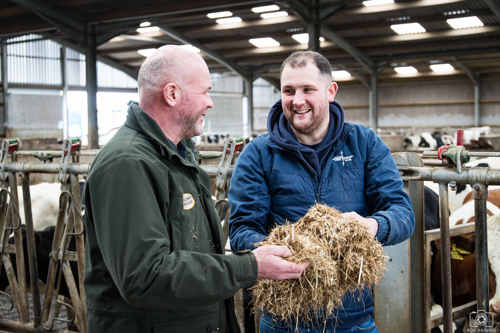
Recognising growing demand for specialised flushing rations, Robin drew on his own practical embryo work experience and, following detailed discussions with Mark, played a key role in communicating how targeted Omega-3 nutrition can improve embryo quality and increase holding rates.
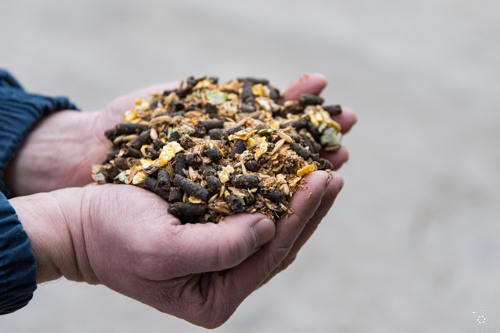
The unique mix is a blend of high-energy, low-protein components designed to improve embryo quality and conception rates and increase Omega-3 levels in both donor and recipient animals. Research shows that increasing blood glucose supports hormones such as IGF, improving follicle development, while EPA and DHA from Omega-3 oils support embryo survival and vigour.
“If you feed too much protein, the uterus becomes acidic, and the chances of the egg implanting drop dramatically. You need the pH level spot on,” explains Robin.
The Myremill programme groups recipient heifers and provides a basic chopped straw/hay mix, plus 3kg of the custom mix, for three weeks before implantation and for five weeks afterwards.
Given the cost of IVF and getting animals in the right condition, Kevin believes it pays to invest that bit extra in the ration when they are being fed anyway. The consistent improvement in conception rates over time, rather than a ‘nine-day wonder’, is attributed to pushing for good forage and maintaining heifers in the right body condition.
Robin is also adamant that there is no room for half measures when it comes to custom blends. If the recommendation is 3kg per head, that is exactly what must be fed, every day, without shaving the rate, or results will suffer, and money is wasted.
A custom mix must be balanced, palatable and fed consistently. If the correct amount is given daily and forage is kept consistent and dry, many variables are removed. Such attention to detail pays off in extra pregnancies.
Show and sale rings
Conception success has been so high at Myremill that the next step is to hold a major on-farm sale. Next spring, around 60 animals from the Luck-E prefix and 60 from Arranview will be offered, with a spread of ages from milking cows to weaned calves.
Luck-E owners Matt and Joe Engel are keen to build connections in the UK and raise the profile of their cow families with British breeders. Exporting embryos to the UK has already proved successful, and registering some females under their own prefix in Britain is seen as the logical next step.
For Kevin and Alison, anyone serious about genetic gain should look closely at ET. Alison stresses that conception rates with IVF eggs can match natural service, so one disappointing result should not put breeders off, as rates will balance out over time when feeding, body condition, and other key variables are right.
With the Luck-E and Arranview sale in the early planning stages for 2027, the Lawries’ enthusiasm for showing will remain an important shop window. Alison is currently preparing four calves and three cows for the UK Dairy Expo.
Kevin sees showing as an enjoyable hobby and invaluable PR to ensure future buyers recognise the Brieryside, Arranview and Luck-E prefixes.
The team recently claimed top honours in the West of Scotland Club Super 6 Winter Herds competition, securing overall victory and the highest points total for their team of six cows. Five of the six were home-bred, underlining the strength of the Brieryside and Arranview breeding programme and the genetics now being marketed through both the sale ring and the IVF flush mix-supported breeding strategy.
Farm Facts:
Farm acreage: 350 owned at Myremill and 200 acres rented. Some 87% of forage is homegrown; 150 acres maize silage; 150 acres wheat; 30 acres barley and three cuts of 220 acres of silage and a further fourth cut of 100 acres.
Stock: 320 milking cows plus 50 followers and 250 youngstock. Cows milked through GEA 30/30 rapid exit parlour. Cows average 11,800litres at 4.2%BF and 3.6%P with all milk sold First Milk.
Show success: Most memorable being reserve intermediate champion at UK Dairy Expo with the Red and White milking yearling, Luck-E Attitude America.
Labour: Gilmour, Kevin and Alison Lawrie with three full-time staff and four part-time relief milkers.
History: Kevin and Alison are the fourth generation to trade under Brieryside Ayrshires and Arranview Holsteins prefixes.
On the Spot:

Biggest achievement – Winning Stockman of the Year at the 2016 Highland Show.
Best investment – Datamars Tru-Test heat and rumination tags, which have taken a lot of pressure off monitoring herd health.
Best advice – Surround yourself with positive friends, family and staff who drown out all the negative noise!
Top Tips – Focus on goals personal to your business rather than follow trends.
Our Latest News and Updates
View All Articles
-
Sheep Feed
Sheep Feed
- Omega Lamb Creep
- Lambmaster
- Omega Max Start
- ForFarmers Prestige Lamb Pellets
- Milkivit Energizer Lamb Whey Free Flow
- SSCL Lamb & Kid Colostrum
- Lamb Finisher
- Omega Ewe
- Maizemaster
- Sheep 30
- Ewbol Gold 18 - 25kg bag
- Super Ewbol 21 Rolls - 25kg bag
- Ewbol 19 - 25kg bag
- Ewbol 18 NS - 25kg bag
- Cattle Feed
-
Other Animal Feed
Other Animal Feed
- Johnston & Jeff Oystershell Grit Fine
- Johnston & Jeff Oystershell Grit Hen Size
- Johnston & Jeff Poultry Tonic
- Farmgate Layers Pellet
- Glasson Grain Poultry Grain
- Allen & Page Goose & Duck Grower/Finisher Pellets
- All Season Peanuts 20kg
- All Seasons Wild Bird Food 20kg
- Johnston & Jeff Black Oil Sunflower Seed
- Johnston & Jeff Fat Balls
- PRICE Johnston & Jeff Ground & Table Mix 12.75kg
- Johnston & Jeff Mealworms
- Johnston & Jeff Niger Seeds
- Johnston & Jeff Peanuts
- Johnston & Jeff Robin & Songbird
- Johnston & Jeff Selected Wild Bird Food
- Johnston & Jeff Spring & Summer
- Johnston & Jeff Suet Dumplings
- Johnston & Jeff Striped Medium Sunflower Seeds
- Johnston & Jeff Sunflower Hearts 2kg and 4kg
- Johnston & Jeff Sunflower Hearts
- Johnston & Jeff Superior Wild Bird Food
- Peckish Complete Wild Bird Mix 12.75kg
- Johnston & Jeff Goldfinch Mix
- Johnston & Jeff High Energy No Mess
- Johnston & Jeff Expert Budgerigar
- Johnston & Jeff Foreign Finch Seed
- Johnston & Jeff Champions Choice Budgerigar
- Johnston & Jeff British Finch
- Johnston & Jeff Lovebird
- Johnston & Jeff Mixed Millet
- Johnston & Jeff Favourite Mixed Canary
- Johnston & Jeff No.1 Parrot Food
- Johnston & Jeff Premium Parrot Fruit
- Johnston & Jeff Cockatiel & Big Parakeet
- Johnston & Jeff Pigeon Breeding Mix
- Johnston & Jeff Four Seasons Pigeon Mix
- Peckish Easy Feeder
- Peckish Winter Warmer
- Peckish Robin Insect Seed Mix
- Peckish No Grow Seed Mix
- Peckish Extra Goodness Crumble Mix
- Peckish Complete Seed Mix
- Peckish Complete Energy Bites
- Johnston & Jeff Peanut Granules
- Johnston & Jeff Duck & Goose
- Johnston & Jeff Calciworms
- Johnston & Jeff Suet Block with Insects
- Johnston & Jeff Suet Block with Berries
- Johnston & Jeff Suet Blocks
- Johnston and Jeff Berry Suet Pellets
- Johnston & Jeff Insect Suet Pellets
- Johnston & Jeff Duck Swan & Goose Mix
-
Equine
Equine
- G&M Equilick + Garlic
- Cool Conditioning Mash
- Heavy Horse Mash
- Omega Breeding & Youngstock Mix
- Omega Senior Mix
- Omega Competition Mix
- Stable Mix
- Total Balancer
- Lite Balancer
- Gain & Sustain Mash
- Allen & Page
- Baileys
- British Horsefeeds
- Charnwood
- Dengie
- Dodson & Horrell
- Equerry
- Friendship
- Keyflow
- Saracen
- Spillers
- TopSpec
- Honeychop
- Thunderbrooks
- Silvermoor
- Baileys Garlic
- Lincoln Brewers Yeast
- Dodson & Horrell Devil's Claw Root
- Dodson & Horrell Hoof Support
- Horslyx Garlic Lick
- Horslyx Mobility Lick
- Horslyx Original Lick
- Horslyx Respiratory Lick
- NAF Biotin Plus Refill
- NAF Cod Liver Oil Plus
- NAF Devil's Relief
- NAF Echinacea Plus
- NAF Garlic Granules Refill (1)
- NAF Garlic Granules Refill
- NAF General Purpose Refill
- NAF Glucosamine
- NAF Linseed Oil
- NAF Mare, Foal & Youngstock
- NAF Mint & Garlic
- NAF Molasses
- NAF Omega Oil
- NAF Pink Powder
- NAF Himalayan Salt Lick
- NAF Seaweed Refill
- NAF Superflex Original
- NAF Superflex 5Star
- NAF Superflex Senior
- NAF Turmeric Plus Refill
- NAF Vit E Selenium & Lysine
- NAF No Bute
- Protexin Gut Balancer
- Super Codlivine The Joint Supplement
- Super Codlivine Original
- TurmerAid
- Absorbine Liquid
- Farriers Formula
- Dodson & Horrell Itch Free (1)
- Lincoln Pig Oil & Sulphur
- Lincoln Muddy Buddy Ointment
- NAF Haylage Balancer
- NAF Mint
- NAF Mud Gard
- NAF Naturalintex Poultice
- NAF Pink Powder Senior
- Lincoln Pig Oil
- NAF Off Deet Power
- NAF Off Extra Effect
- NAF Off Citronella Spray
- Carr & Day & Martin Flygard Extra Strength
- Barrier Super Plus Fly Spray
- NAF Naturalintex Poultice
- Battles Summer Fly Cream
- NAF Purple Spray
- Lincoln Muddy Buddy Magic Mud Kure
- Lincoln Sun Bloc
- Lincoln Sheath Cleaner
- Lincoln Muddy Buddy Powder
- Lincoln Total Groom
- Lincoln Hoof Oil
- Lincoln Classic Mane & Tail Conditioner
- Lincoln Classic Shampoo
- Lincoln Insecticidal Lice Control Powder
- Lincoln Classic Neatsfoot Oil
- Lincoln Grooming Block
- Lincoln Liniment Shampoo
- Lincoln Antibacterial Green Oil
- Lincoln Antibacterial Green Gel
- Lincoln Iodine Solution
- Lincoln Hair Polish Spray
- Lincoln Magic Gel
- Lincoln Power Repel
- Lincoln Classic Fly Repellent
- Lincoln Muddy Buddy Scrub
- Lincoln Pine Tar Spray
- Effol Hoof Ointment
- NAF Daily Gut Health
- NAF Pro Feet Pellets
- NAF Dressing
- NAF Saddle Soap
- NAF Hoof Poultice
- Keratex Hoof Moisturiser
- Keratex Mud Shield Powder
- Keratex Hoof Hardener
- Carr & Day & Martin Canter Mane & Tail
- Carr & Day & Martin Canter Coat Shine
- Carr & Day & Martin Belvoir Tack Cleaner Spray
- Carr & Day & Martin Belvoir Tack Conditioner Spray
- Carr & Day & Martin Leather Oil
- Car & Day & Martin Cornucrescine Tea Tree Hoof Oil
- Carr & Day & Martin Vanner & Prest Stockholm Tar
- Carr & Day & Martin Cornucrescine Original Hoof Ointment
- Carr & Day & Martin Cornucrescine Daily Hoof Dressing
- Carr & Day & Martin Cornucrescine Daily Hoof Moisturiser
- Carr & Day & Martin Cornucrescine Daily Hoof Barrier
- Dodson & Horrell Lami-Free
- Nikwax Leather Cleaner
- Mane N' Tail Conditioner
- Mane N' Tail Shampoo
- Mane N' Tail Spray & Braid
- Mane N' Tail Shine-On Spray
- Dermoline Insect Shampoo
- Dermoline Tea Tree Shampoo
- Dermoline Medicated Shampoo
- Carr & Day & Martin Gallop Shampoo
- Absorbine ShowSheen 2-in-1 Shampoo & Conditioner
- Absorbine ShowSheen Hair Polish & Detangler
- Absorbine ShowSheen Stain Remover & Whitener
- Absorbine ShowSheen Miracle Groom
- Radiol M-R Muscle Embrocation
- Hatch Wells White Chalk Blocks
- Alto Lab Shimmering White Shampoo
- Lincoln Sponge
- Lincoln Pre-Clip Shampoo
- Lincoln Plaiting Mist
- NAF Naturalintx Wrap
- Carr & Day & Martin Belvoir Leather Balsam Intensive Conditioner
- Jolly Ball
- Likit Holder
- Likit Graze Maze
- Lincoln Shedding Blade
- Lincoln Plaiting Kit
- Lincoln Aluminium Mane Comb
- Lincoln Large Metal Curry Comb
- Hy Equestrian Ombre Mane & Tail Brush
- Hy Equestrian Pro Groom Comb
- Hy Equestrian Pro Groom Sweat Scraper
- SoloBrush
- SoloComb
- SoloRake
- Hy Equestrian Perfect Plaits
- Hy Equestrian Horseshoe Brush
- Hy Equestrian Glitter Mane & Tail Brush
- Hy Equestrian Glitter Body Brush
- Hy Equestrian Glitter Dandy Brush
- Lincoln Mane and Tail Scissors
- Lincoln Hoof Oil Brush With Container
- Lincoln Hoof Pick With Brush
- Lincoln Grippee Hoof Pick
- Lincoln Hoof Oil Brush
- Haas Ponylove Fellglanz Brush
- HAAS Kombi Brush
- HAAS Kids Brush
- HAAS Duo Azzuro Hoof Brush
- HAAS Schimmel Brush for White Horses
- HAAS Fellglanz Brush
- HAAS Diva Mini Brush
- HAAS Diva Girlie Girl Brush
- HAAS Cuddle Brush
- Lincoln Rubber Curry Comb
- Lincoln Ultimate Brush with Plaiting Kit
- Likit Tongue Twister
- Likit Snak-a-Ball
- Likit Starter Kit
- Classic Magic Brushes
- Hy Equestrian Pro Groom Bucket Brush
- Hy Equestrian Fieldsafe Head Collar
- Hy Equestrian Dazzle Head Collar
- Hy Equestrian Deluxe Padded Head Collar
- Hy Equestrian Plaited Lead Rope
- Hy Equestrian Extra Thick Extra Soft Lead Rope
- Lincoln Plaiting Bands
- Red Gorilla Manure Fork
- Red Gorilla Plastic Shovel
- Harold Moore Plastic Round Feed Scoop
- STUBBS Hookie
- Hy Equestrian Stable Chain
- Harold Moore Shavings Shifter/Snow Shovel
- Harold Moore Feed Stirrer
- Fyna-Lite Shavings Fork
- Fyna-Lite Funky Fork
- Red Gorilla Premium Bucket
- Red Gorilla Broom
- Harold Moore Feed Scoop
- Lincoln Feed Bucket
- Dustbin & Lid
- Red Gorilla Corn Broom
- Red Gorilla Bedding Fork
- STUBBS Bridle Rack
- Munch Net
- Lincoln Small Mesh Hay Net
- Harold Moore Broom
- Lincoln Large Polypropylene Hay Net
- HyCONIC Haynet
- Elim-a-Net Haynet
- Silvermoor Rope Kits
- Vetcling
- Harold Moore Unifork
- STUBBS Tie Ring
- Red Gorilla Tidee
- Lincoln Stable Bucket Cover
- Hy Equestrian Bandage Tape
- G&M Yellow Tubtrug Flexible Shallow - 15ltr
-
Pet Supplies
Pet Supplies
- Gor Reef Holiday Big Daddy Octopus
- Gor Reef Holiday Mommy Octopus
- Gor Reef Holiday Baby Octopus
- Kong Holiday Knots Frog
- Kong Holiday Wild Knots Bear
- Kong Holiday AirDog Donut
- Kong Holiday Wubba
- Kong Holiday Floppy Knots
- Kong Holiday Knots Hippo
- Kong Holiday Snuzzle Penguin
- Kong Holiday Cozie Reindeer
- Kong Holiday Core-Strength Bone
- Kong Holiday Paw Stocking
- Kong Holiday Shakers Reindeer
- Kong Holiday AirDog Fetch Stick
- House of Paws Holiday Robin
- Kong Holiday Snuzzles Reindeer
- Chappie Complete Adult Beef and Wholegrain
- Chappie Complete Adult Chicken & Wholegrain
- Chudleys Classic
- Dr John Gold
- Dr John Hypoallergenic Chicken
- Dr John Grain Free Chicken & Potato
- Dr John Silver
- Dr John Titanium
- G&M Meaty Crunch
- Pedro Country Muesli
- Pedro Supreme Muesli Beef & Vegetables
- Pedro Salmon
- Crunchy Chicken
- Royal Canin Mini Adult
- Butchers Tripe Tins
- Butchers Tripe & Chicken Tins
- Pedro Chicken & Beef Tins
- Dr John Hypoallergenic Lamb
- Pedro Sticky Muesli
- Chudleys Original
- Pedro Salmon Grain Free
- Chappie Complete Adult Beef & Wholegrain
- Chappie Complete Adult Chicken & Wholegrain (1)
- Pedigree Complete Adult Poultry & Veg
- James Wellbeloved Puppy Turkey & Rice
- James Wellbeloved Puppy Lamb & Rice
- James Wellbeloved Adult Lamb & Rice
- James Wellbeloved Adult Turkey & Rice
- James Wellbeloved Senior Turkey & Rice
- James Wellbeloved Grain Free Turkey & Veg
- James Wellbeloved Senior Turkey & Rice (1)
- Burns Puppy Original Chicken & Rice
- Burns Puppy Mini Chicken & Rice
- Burns Toy & Small Breed Chicken & Rice (1)
- Pedigree Adult Dog Mixer
- Royal Canin Mini Adult 8+
- Burns Original Chicken & Rice
- Burns Sensitive Pork & Potato
- Burns Original Lamb & Rice
- Pedro Chicken Grain Free
- Bakers Small Dog
- Bakers Meaty Meals Chicken
- Bakers Meaty Meals Beef
- Bakers Adult Chicken & Veg
- Bakers Adult Beef & Veg
- Bakers Puppy Chicken
- Animology Spa Day Shampoo
- Animology Dirty Dawg No Rinse Dog Shampoo
- Animology Stink Bomb Deodorising Dog Spray
- Animology Knot Sure De-Tangle Dog Spray
- Animology Mucky Pup Shampoo
- Animology True Colours Dog Shampoo
- Animology Hair of the Dog Anti-Tangle Dog Shampoo
- Animology White Wash Dog Shampoo
- Animology Top Dog Conditioner
- Animology Flea and Tick Dog Shampoo
- Animology Dogs Body Dog Shampoo
- Animology Fox Poo Dog Shampoo
- Animology Puppy Love Puppy Shampoo
- Animology Curly Coat Dog Shampoo
- Animology Clean Ears
- Animology Tear Stain Remover
- Rosewood Soft Protection De-Matting Comb
- Rosewood Soft Protection Slicker Brush
- Rosewood Soft Protection Porcupine Brush
- Rosewood Self Cleaning Slicker brush
- Burns Black Pudding/Hot Dog Sticks
- Burns Moon Bone
- Burns Jumbo Smokie
- Burns Meat Jerky
- Burns Salmon Grills
- Burns Liver Jerky
- Burns Original/Haggis Sausages
- Burns Petaroni Sticks
- Burns Pizza Rounds
- Anco Pigs Ears
- Anco Roots
- Anco Lambs Horn
- Anco Bully Pizzle Stick
- Anco Red Deer Leg
- Anco Moo Chew
- Anco Antlers
- Anco Pork Roll
- Anco Chicken Feet
- Anco Turkey Neck
- Anco Lamb Trotter
- Anco Biltong Wrapped Lamb Trotter
- Anco Hairy Rabbit Ear
- Anco Goat Feet
- Anco Bully Tube
- Anco Turkey Feet
- Anco Bully Snout
- Anco Empty Hoove
- Anco Camel Roll
- Anco Giant Cow Ear
- Anco Hairy Rabbit Feet
- Anco Puffed Pig Snout
- Anco Lamb Horn Marrow
- Anco Buffalo Tube
- Anco Goat Horn
- Anco Camel Stick
- Anco Braids
- Anco Collagen Waffle
- Anco Collagen Cigar
- Anco Turkey Selects
- Anco Salmon Skin Cubes
- Anco Beef Selects
- Anco Duck Selects
- Anco Duck Feet
- Anco Large Bully Pizzle Stick
- Anco Wild Game Selects
- Wagg Cookie Treats
- Wagg Training Treats
- Wagg Low Fat Treats
- Wagg Tasties Treats
- Wagg Puppy & Junior Treats
- Wagg Bacon Roll Treats
- Wagg Steak Pie & Gravy Treats
- Wagg Fish Finger Treats
- Wagg BBQ Bangers Treats
- Wagg Sausage & Mash Treats
- Wagg Ham & Cheese Toastie Treats
- Wagg Steaklets Treats
- Wagg Lamb Chop Treats
- Wagg Sensitive Treats
- Wagg Yumms with Liver
- Wagg Yumms with Chicken
- Whimzees Toothbrush
- Whimzees Hedgehog
- Whimzees Alligator
- Whimzees Rice Bone
- Whimzees Antler
- Whimzees Veggie Ear
- Whimzees Stix
- Pedigree Dentastix Small Dog
- Pedigree Dentastix Medium Dog
- Pedigree Dentastix Large Dog
- Burgess SupaCat Chicken Cat Food
- Burgess SupaCat Salmon Cat Food
- Pedro Kat
- Pedro Cat Tins
- Whiskas 1+ Dry Adult Cat Food
- James Wellbeloved Adult Turkey & Rice
- Go-Cat Adult Chicken & Duck
- Go-Cat Adult Tuna Herring & Veg
- Go-Cat Adult Indoor Chicken Turkey & Veg
- Go-Cat Adult Dry Food
- Whiskas 1+ Tuna Adult Dry
- Whiskas 1+ Chicken Adult Dry
- Whiskas 1+ Pouches Mega Pack
- Whiskas Kitten Pouches in Jelly
- Whiskas 1+ Adult Pouches in Jelly
- Whiskas 1+ Adult Pouches in Gravy
- Whiskas 1+ Meaty Menu in Jelly
- Whiskas 7+ Poultry Senior Pouches
- Whiskas 11+ Senior Pouches in Jelly
- Felix Mixed Selection in Jelly
- Felix Mixed Selection in Gravy
- Felix Fish Selection in Jelly
- Felix Mixed Selection in Jelly Jumbo Pack
- Felix Kitten Pouches in Jelly
- Butchers Classic Variety Meat Tins
- Chudleys Rabbit Royale
- Dr John Merlin Ferret
- Excel Adult Rabbit Nuggets with Mint
- Excel Guinea Pig Nuggets with Mint
- Russel Rabbit Tasty Mix
- Gerty Guinea Pig Mix
- Mr Johnson’s Supreme Guinea Pig Mix
- Burgess Excel Junior & Dwarf Rabbit Nuggets
- Burgess Excel Mature Rabbit Nuggets
- Harry Hamster Tasty Mix
- Mr Johnsons Supreme Tropical Rabbit Mix
- Twitch Guinea Pig Nuggets
- Twitch Rabbit Nuggets
-
Hardware & Clothing
Hardware & Clothing
- Stallion Calfateria FC5 Teat Feeder - 30L
- Stallion Calfateria FC10 Teat Feeder
- Stallion Calfateria FC12 Teat Feeder
- Stallion Cafeteria FC13 Teat Feeder
- Stallion Milk Maid 3 Teat Compartmentalized Feeder
- Stallion Milk Maid 5 Teat Compartmentalized Feeder
- Stallion Milk Maid 6 Teat Compartmentalized Feeder
- Stallion Milk Maid 8 Teat Compartmentalized Feeder
- Stallion Milk Maid 12 Teat Compartmentalized Feeder
- Grassland
-
Brands
Brands
- Red Gorilla Tubtrug Flexible
- Red Gorilla Tubtrug Flexible - 26ltr
- Red Gorilla Tubtrug Flexible - 38/42ltr
- Red Gorilla Tubtrug Flexible Shallow - 5ltr
- Red Gorilla Tubtrug Flexible Shallow - 35ltr
- Red Gorilla Tubtrug Flexible Shallow - 15ltr
- Red Gorilla Flexible Bucket & Handle
- Red Gorilla Plastic Feed Skip - Small
- Red Gorilla Plastic Feed Skip - Medium
Write a Review
Please share your experience.
Create an account today
Create your Galloway & Macleod account today. Receive exclusive offers and discounts with quicker checkout experience.
This email is already registered with us.
Instead, please Reset your Password.
Login
Sign in to your Galloway & Macleod account to view, manage and place orders.
There was an error updating your account details! Please try again.
Reset Password
Re-gain access to your account.
Please check your email, we have sent you password reset link.
Newsletter
Sign up for the latest news and advice.
Free Product Offer
Based on your current basket we have found you are eligible for a free product!